Tower Rush - Real money or pure entertainment?
Tower Rush Online Game: Is it worth playing with real money?
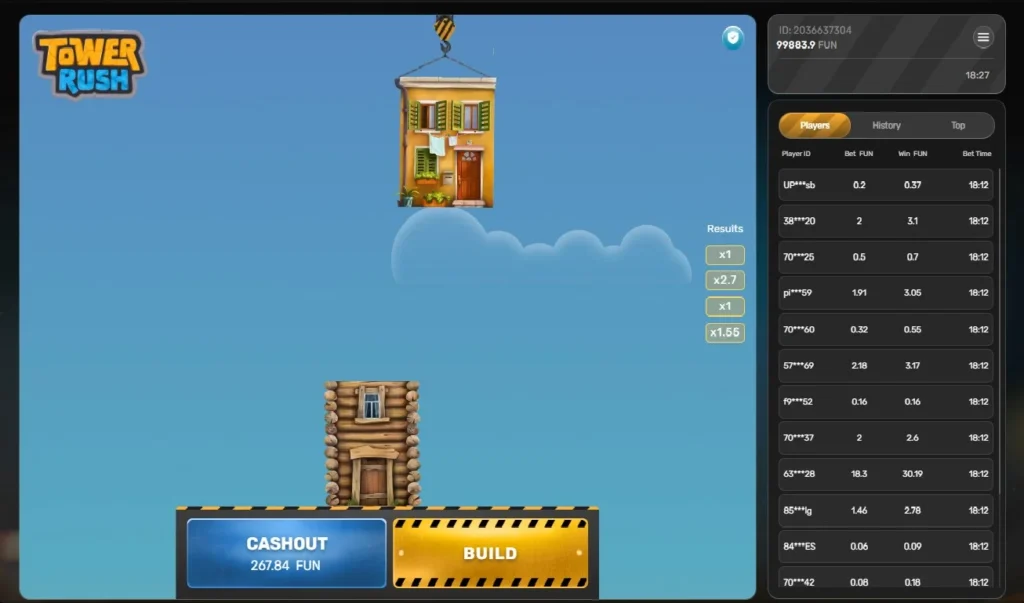
The Tower Rush demo is addictive. The blocks fall, the multiplier rises, the CASHOUT is there waiting. Everything works, everything flows. And then comes the obvious question: is it worth taking the leap to real money?
It’s not a trivial question. Moving from virtual credits to euros involves a change that goes beyond the mechanics of the game. Emotions, pressures, and decisions are activated that the demo cannot simulate. This article analyzes whether that transition makes sense — from a practical, financial, and gaming experience perspective.
Real money mode rating: 4.0 / 5 ★★★★☆
Tower Rush offers a solid real money experience: competitive RTP, functional withdrawals, and a level of control over cashout that few crash games match. It’s worth it if you enter with a plan, a budget, and realistic expectations. It’s not worth it if you expect guaranteed winnings.
First: what changes when real money is at stake
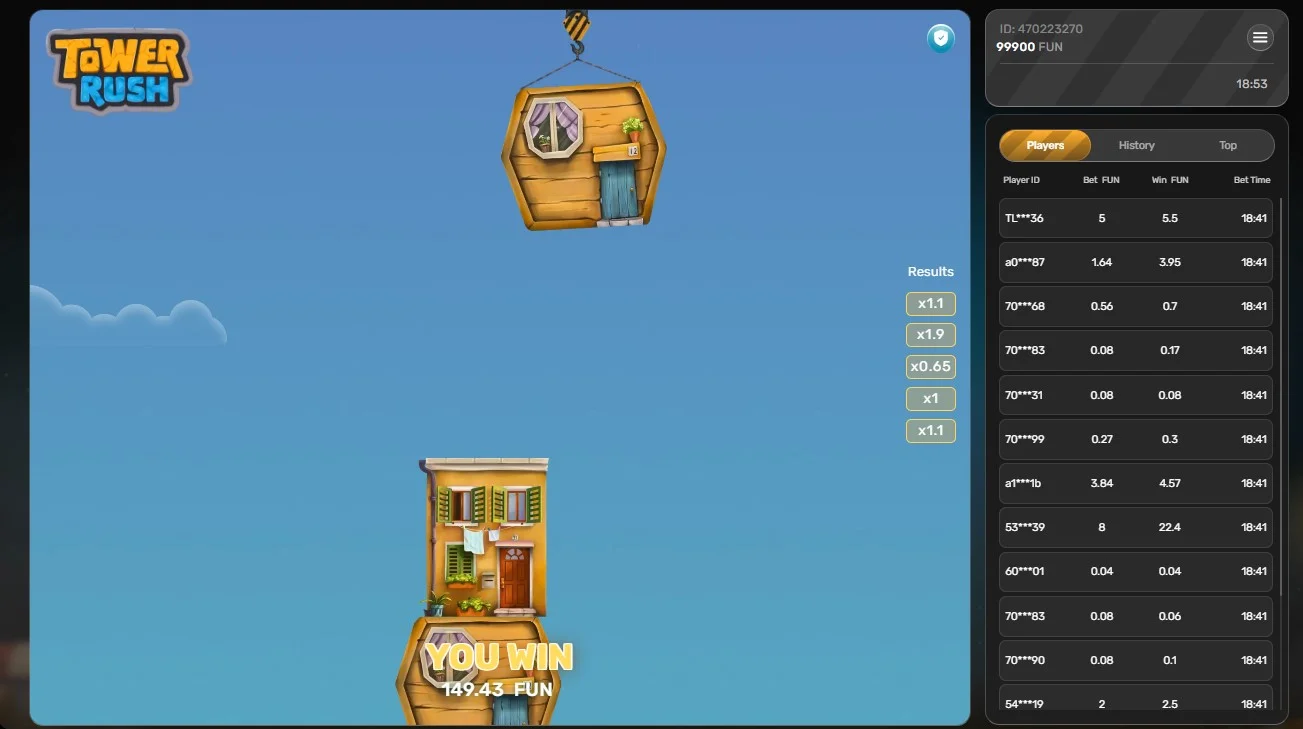
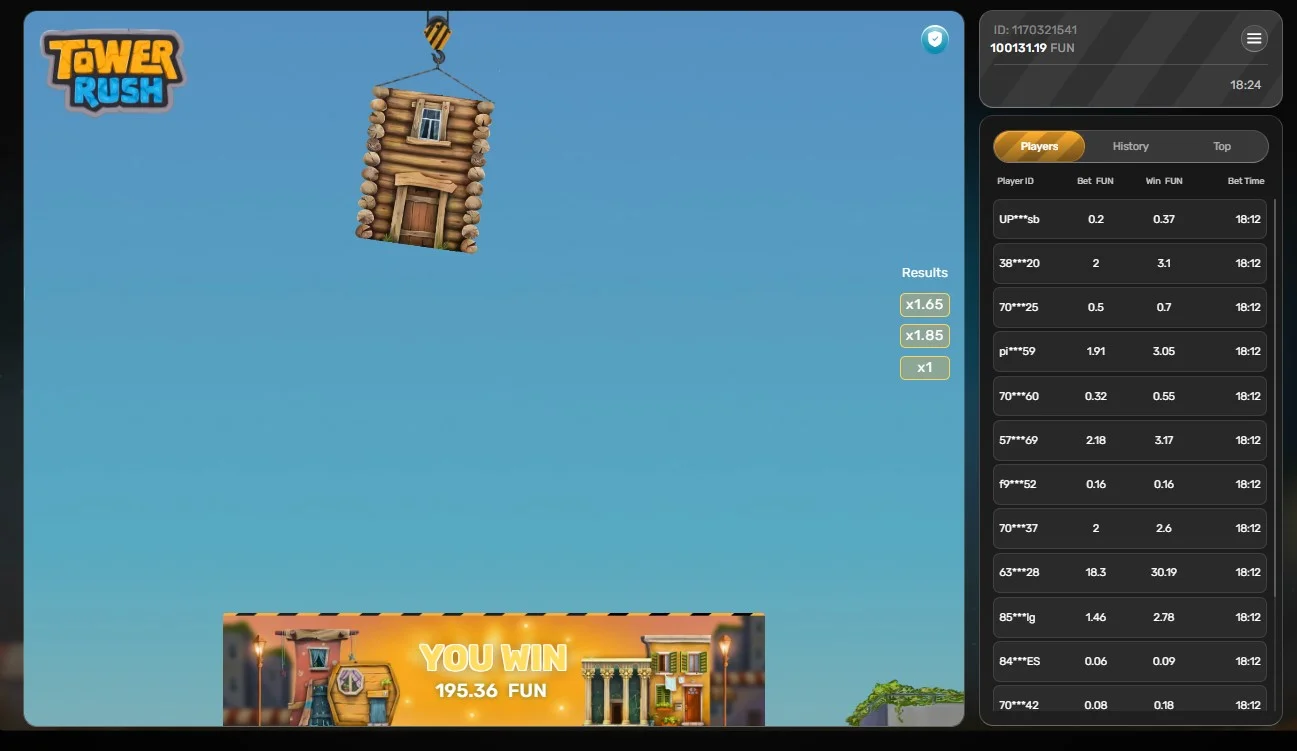
I have played over 300 rounds in the demo and about 400 with real money. The game is identical. The blocks move the same, the multipliers progress the same, the bonuses appear with the same frequency. What changes is not on the screen — it’s in your head.
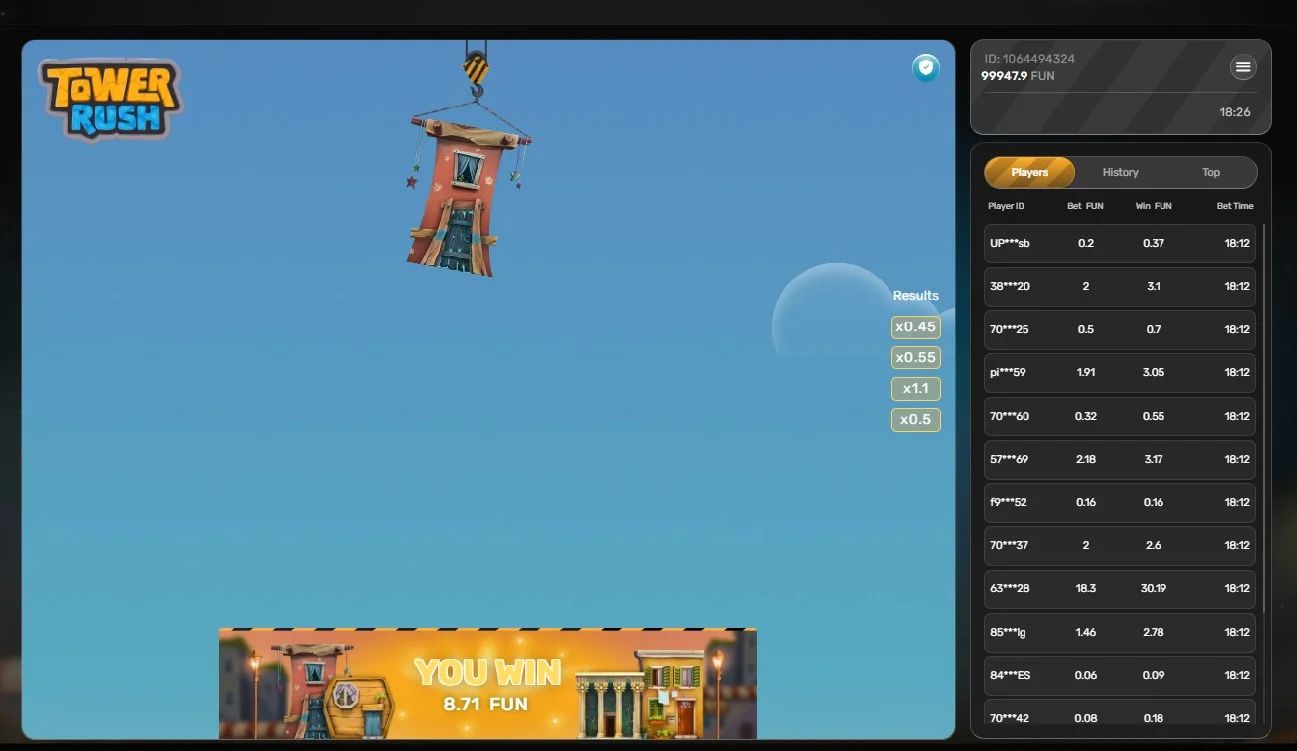
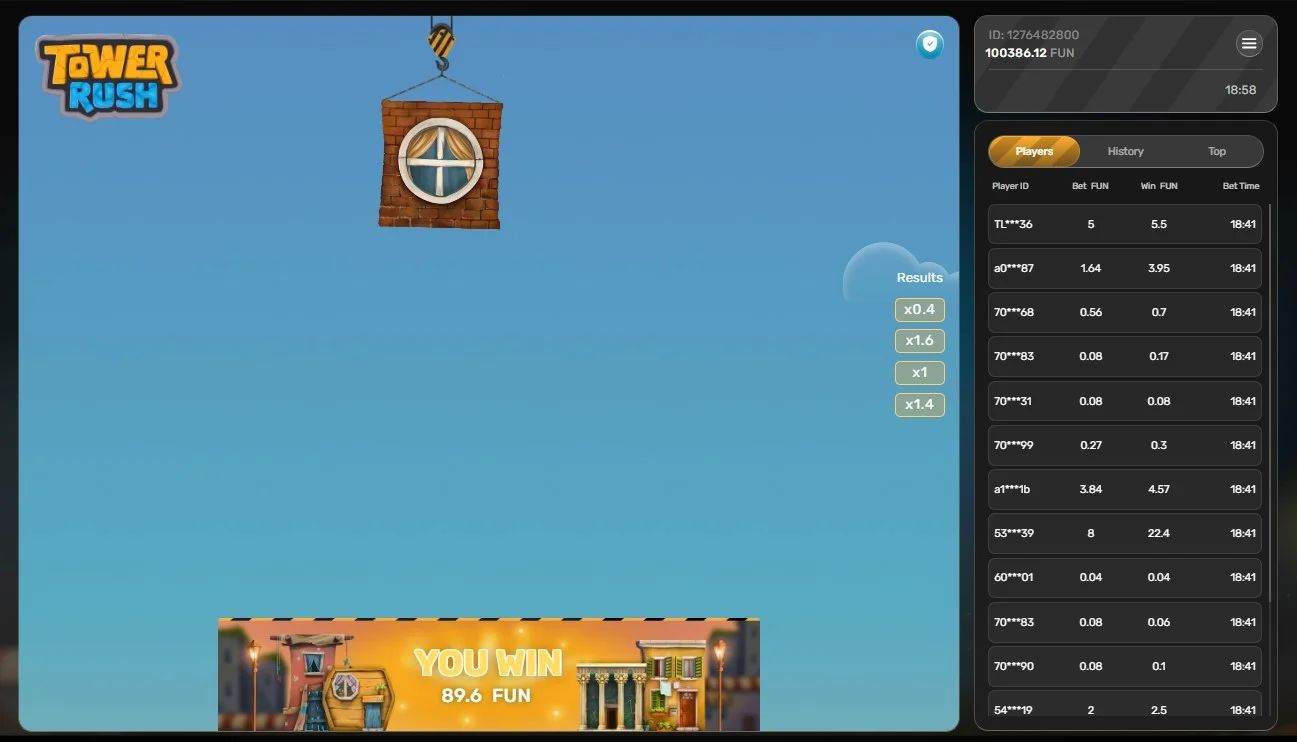
With real money, every cashout decision weighs more. In the demo, reaching x14 and seeing the tower collapse in the attempt for x15 is an anecdote. With euros on the table, that same situation generates real frustration. And vice versa: cashing out a x12 with real stakes produces a satisfaction that virtual credits cannot replicate.
This psychological shift is the most important factor to consider. If you are the type of person who stays calm under economic pressure, the real mode amplifies the experience positively. If the possibility of losing money destabilizes you emotionally, the demo may be sufficient — and there’s nothing wrong with that.
The real cost of playing Tower Rush
Before discussing whether it’s worth it, we need to talk about how much it costs. Not in theory — in practice.
Real calculation based on my experience:
Weekly budget: €20, divided into three sessions.
Average bet per round: €0.25.
Rounds per session: 40-60 (in about 15 minutes).
Average cashout: x6 to x8.
Result after four weeks (€80 invested): -€11 net. This equates to an effective return of 86.1%, below the theoretical RTP of 96-97%, but within the normal range for a sample of about 600 rounds with high volatility.
Entertainment cost: approximately €2.75 per week. Less than a coffee with toast.
That €11 net loss bought about twelve hours of active entertainment throughout the month. Not a bad ratio if you compare it to other forms of leisure — but it’s a cost, not an investment. That distinction matters.
Who is it worth it for? Three profiles
It is worth it if…
Profile 1: The disciplined player. You have a fixed budget for entertainment, you don’t mind losing it, and you enjoy the adrenaline of decisions under pressure. Tower Rush offers you a fast format with a real sense of control. The jump to real money amplifies the experience without getting out of control.
Profile 2: The one coming from other crash games. If you already play Aviator, Spaceman, or similar games for real money, Tower Rush adds a layer of manual skill that the others lack. You’re not changing risk categories — you’re changing formats. And you’ll probably find it more interesting.
Better to stay in the demo if…
Profile 3: The one looking to make money. Tower Rush is not a source of income. The RTP of 96-97% means that the casino retains 3-4% in the long run. You can have positive sessions — sometimes very positive — but the net flow over hundreds of rounds tends to go against the player. If your main motivation is economic profit, no crash game is the right answer.
How the cost compares to other entertainment formats
Almost no one does this, but I think it’s useful to put things in perspective:
Cost per hour of entertainment (approximate):
Tower Rush (with my budgeting system): ~€2.30 / hour
Cinema: ~€5-7 / hour
Streaming platform: ~€0.30 / hour (if you use it a lot)
New video game (€60 for 30 hours): ~€2 / hour
Going out for drinks: ~€8-12 / hour
Tower Rush is neither the cheapest nor the most expensive option. It’s in a mid-range, comparable to a conventional video game, as long as you control your spending.
The key is in "as long as you control the spending." Without a fixed budget, the hourly cost of Tower Rush can skyrocket. Rounds last seconds, and in fifteen minutes you can burn through thirty rounds without realizing it. A session cap is not optional — it’s what makes Tower Rush reasonable entertainment instead of uncontrolled spending.
The practical process: from demo to real money
If you’ve decided you want to try with real money, the process is straightforward. Nothing complicated, but there are a couple of steps that are best done right from the start.
Choosing a casino
Tower Rush is available at dozens of international casinos. Not all are the same. What you should check before registering:
- Active license — Malta Gaming Authority, Curaçao eGaming, or Gibraltar are the most common. The information is in the footer of the website.
- SSL encryption — the padlock in the browser bar. Without this, don’t even register.
- Clear withdrawal conditions — look for the timelines and methods before depositing.
- If you plan to activate a bonus: check that crash games are included in the wagering conditions, and what percentage they contribute.
Registration and verification
The standard form: name, date of birth, email, address. Confirmation by email. Three minutes at most. My recommendation: upload the KYC documents (ID + proof of address) immediately after registration. This way you won’t have to wait when you want to withdraw.
First deposit
| Method | Credit time | Usual minimum deposit |
|---|---|---|
| Visa / Mastercard | Immediate | 10-15 € |
| Skrill / Neteller | Immediate | 10 € |
| Bank transfer | 1-2 business days | 15-20 € |
| Bitcoin / Ethereum | 10-60 minutes | Variable |
My advice for the first time: deposit the minimum. You don't need more to test the real experience. With €10 and bets of €0.10-€0.20 you have between 50 and 100 rounds ahead. Enough to know if the format convinces you with money on the line.
Withdraw winnings
Times depend on the method and the casino. In my experience: e-wallets process in less than 24 hours. Cards take two to five days. Cryptocurrencies are usually the fastest, often within a few hours. KYC verification is only done once — if you did it when registering, the first withdrawal will be as fast as the following ones.
Bonuses: do I use them or skip?
Almost all casinos offer welcome bonuses. The question with Tower Rush is whether activating them makes sense. The short answer: it depends, and often it doesn't.
The problem with bonuses in crash games: many casinos do not allow using the bonus on crash-type games, or they allow it but with a very low contribution (10-20% of the wagering). That means if the bonus has a wagering requirement of 35x, the actual requirement for Tower Rush can be 175x to 350x of the bonus. Mathematically, the cost of meeting those conditions usually exceeds the value of the bonus.
Practical rule: If the casino allows crash games at 100% of the wagering and the conditions are 30x or less, the bonus may be worth it. In any other case, it is usually better to play without a bonus and have total freedom to withdraw whenever you want.
What I learned playing with real money for a month
Four weeks, twelve sessions, about 600 rounds. These are the lessons I didn't expect:
My actual cashout point is lower than in the demo. In the demo, I routinely hit multipliers of x10 to x15. With real money, my average dropped to x6-x8. Not because I played worse — but because the pressure of losing real money made me more conservative. And honestly, that more cautious version yielded better overall results.
Short sessions perform better than long ones. My three best sessions lasted between eight and twelve minutes. The two worst exceeded twenty-five. After fifteen minutes, I notice my concentration drops and I start making impulsive decisions. The twenty-minute limit I imposed on myself was not a whim — it was a real necessity.
The Frozen Floor changes the real game rules. In the demo, the Frozen Floor is interesting. With real money, it is transformative. Knowing you have a guaranteed minimum frees you in a way that you can't simulate with virtual credits. The three times it appeared during the month were the most intense and the most profitable moments.
Losing three rounds in a row is not a crisis. At first, every bad streak made me anxious. After a few sessions, I understood that high volatility means exactly that: streaks. What matters is not the individual round but the overall result of the session. And for that, you need enough rounds — which you only get with small bets.
Opinions from players who made the leap
"I played three weeks in the demo before putting in money. The transition was smooth, but the excitement is something completely different. Now I understand why people say that Tower Rush is addictive — it's not the mechanics, it's the tension of the decision with real money."
"It's worth it if you're realistic. I put in €7 a week and play two ten-minute sessions. Sometimes I end up with €9-10, sometimes with €3. The overall balance is slightly negative, but the fun I get from those twenty minutes a week more than makes up for it."
"I come from Aviator. Tower Rush with real money is better because I feel that my skill really influences it. I not only choose when to cash out — I also have to hit the block. That makes each round more personal."
"Honestly, the demo seems sufficient for me. I tried with real money for two weeks and realized that the pressure took away the fun instead of adding to it. I went back to the demo and I'm still there, very happy. Not everyone needs to bet to enjoy."
The three bonuses in the context of real money
The bonuses in Tower Rush work the same in demo and real, but their emotional impact is radically different:
Frozen Floor. With real money, this bonus is pure gold. Knowing that your multiplier is secured allows you to build several more floors without the fear of losing it all. In my real sessions, the Frozen Floor was responsible for my three best individual results.
Temple Floor. The multiplier roulette. In the demo, it's a nice detail. With real money, any boost counts — even if it's modest. My recommendation: cash out immediately after a Temple Floor. You already have the extra, you don't need to risk more.
Triple Build. Three automatic floors with no risk of failure. With real money, those three free floors mean your multiplier increases without the chance of making a mistake. Especially valuable from floor seven or eight, where manual placement becomes more demanding.
Game security and fairness
Tower Rush uses Provably Fair technology and a random number generator certified by independent laboratories. Each round can be individually verified. Galaxsys operates with international licenses and its games are present on more than a hundred regulated platforms.
The published RTP (96.12-97 %) is consistent with the technical documentation and with practical gaming experience. Volatility is high, which means streaks of uneven results — something that is part of the design, not a system flaw.
In the Spanish context, Tower Rush is available through international platforms licensed by MGA, Curaçao, or Gibraltar. The DGOJ regulates online betting and poker, but the current regulatory framework does not cover this type of instant games. Players legally access foreign operators with active licenses.
Direct questions about real money
How much do I need to start?
Can I win real money with Tower Rush?
Is it better to play with or without a bonus?
How long do withdrawals take?
Is the demo enough for some players?

Lucía García
iGaming Analyst and Gambling Psychology Specialist
My answer to the title question
Is it worth playing Tower Rush for real money? It depends on what you're looking for and how you manage your spending.
If you have an entertainment budget, enjoy the tension of decisions with real consequences, and maintain discipline in cashing out, then yes — real money amplifies the Tower Rush experience in a way that the demo cannot match. The Frozen Floor becomes a memorable moment, each round carries weight, and the satisfaction of a good cashout is genuine.
If you are looking for economic gains, if the idea of losing generates anxiety, or if you cannot set a spending limit and stick to it, the answer is no. The demo exists for a reason, it is free, and it is fully functional.
Tower Rush for real money is neither a gold mine nor a trap. It is exactly what it seems: a well-designed crash game with an entertainment cost that you control. The key is to enter with your eyes wide open.
My rating for the real money mode: 4.0 out of 5.
Responsible gaming: Tower Rush is a chance-based entertainment product with a mathematical advantage for the casino. Set a budget before each session and do not exceed it under any circumstances. If you feel that gambling is affecting your well-being, contact the player support services in your autonomous community or organizations like Gamblers Anonymous.

 English
  Spanish
  French
  German
  Italian
  Polish
  Hungarian
  Romanian